 Corrosion
Rusted Screw Tips And Purlins
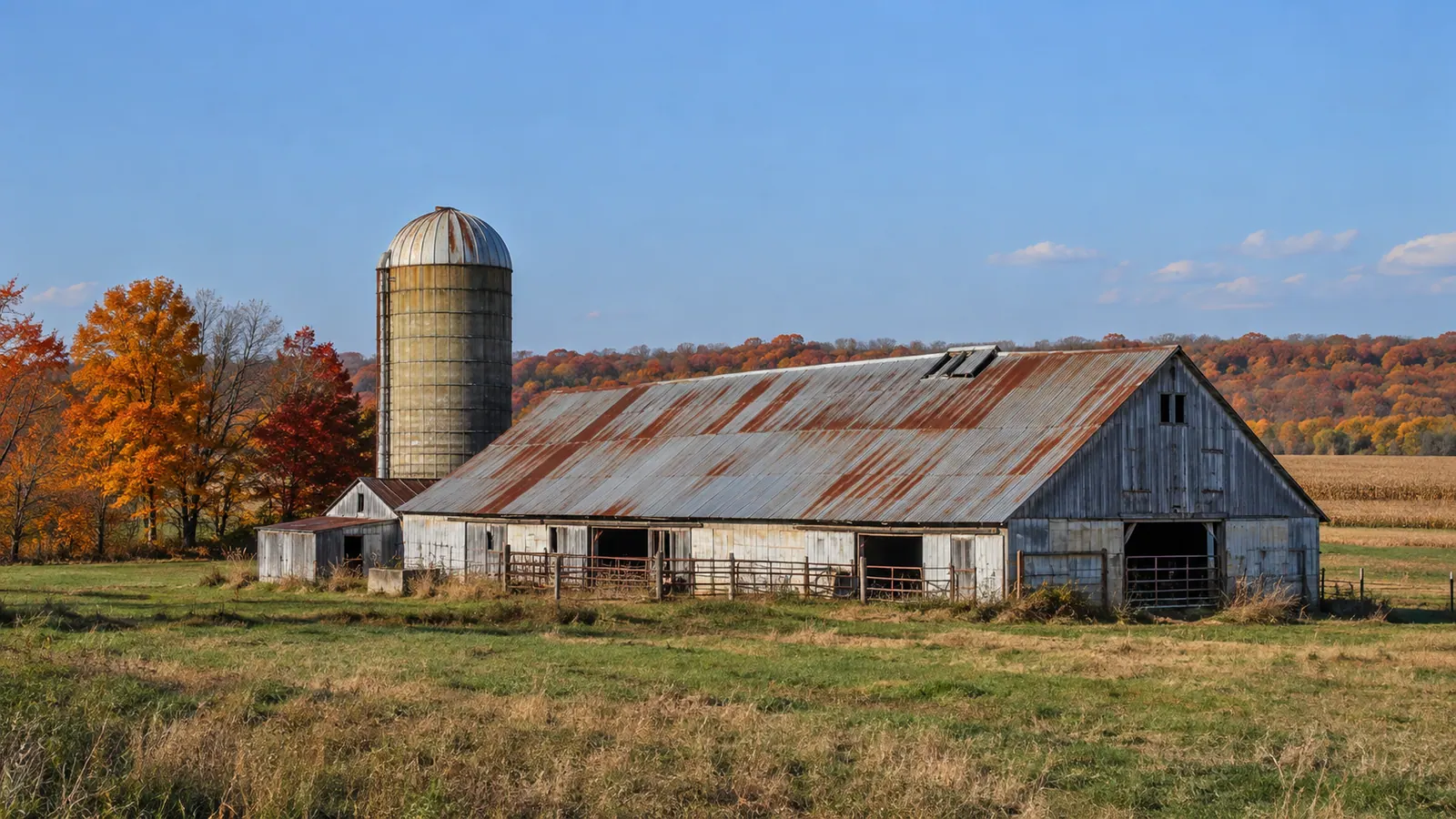
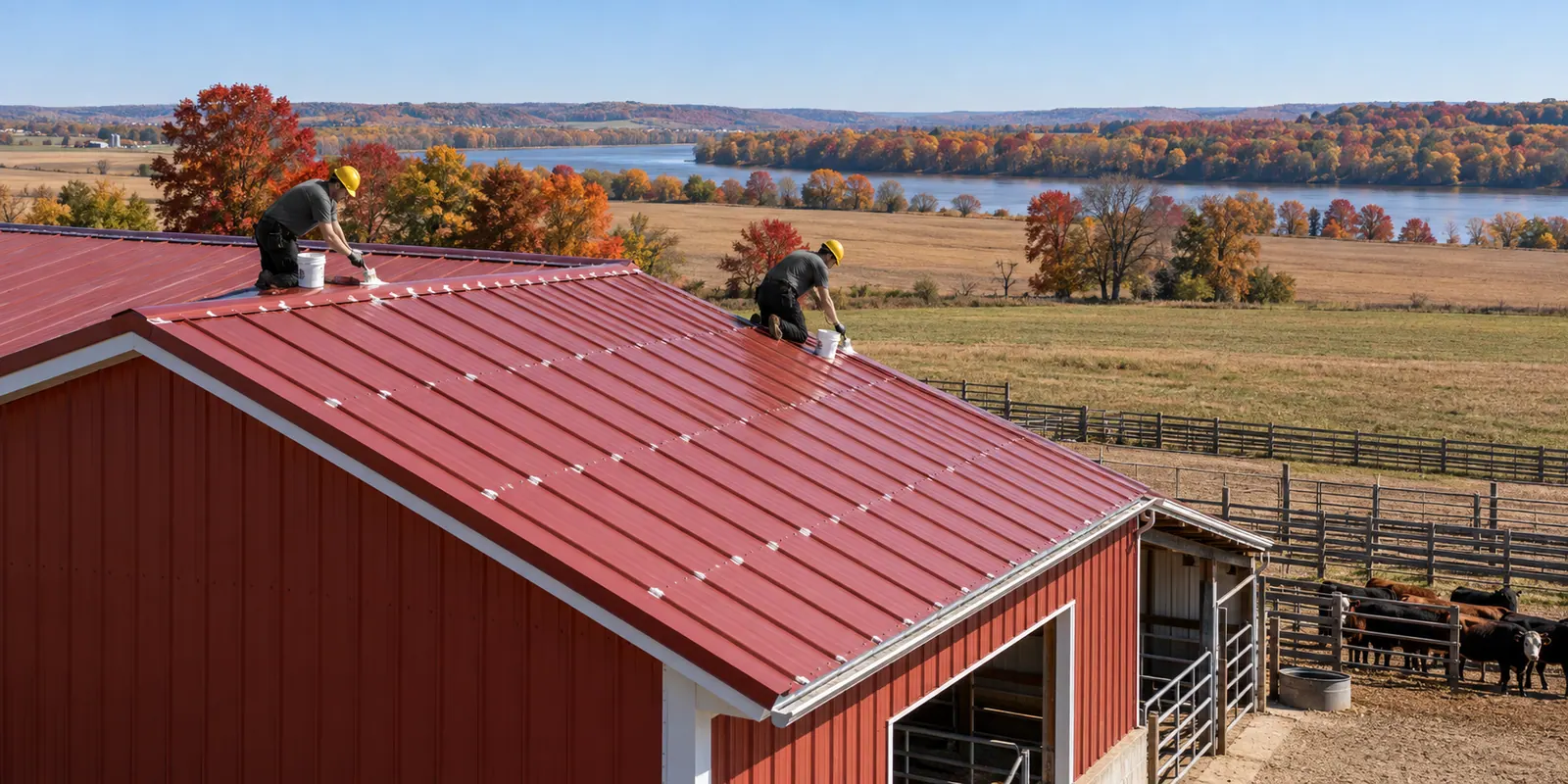
Moist air from livestock or stored fertilizer reaches the screw tips and purlins first. Rust there loosens screws even when the roof looks fine from above.
We do metal roof coating on farm buildings, machine sheds, and commercial shops in and around Morganfield once the panels and purlins prove solid.
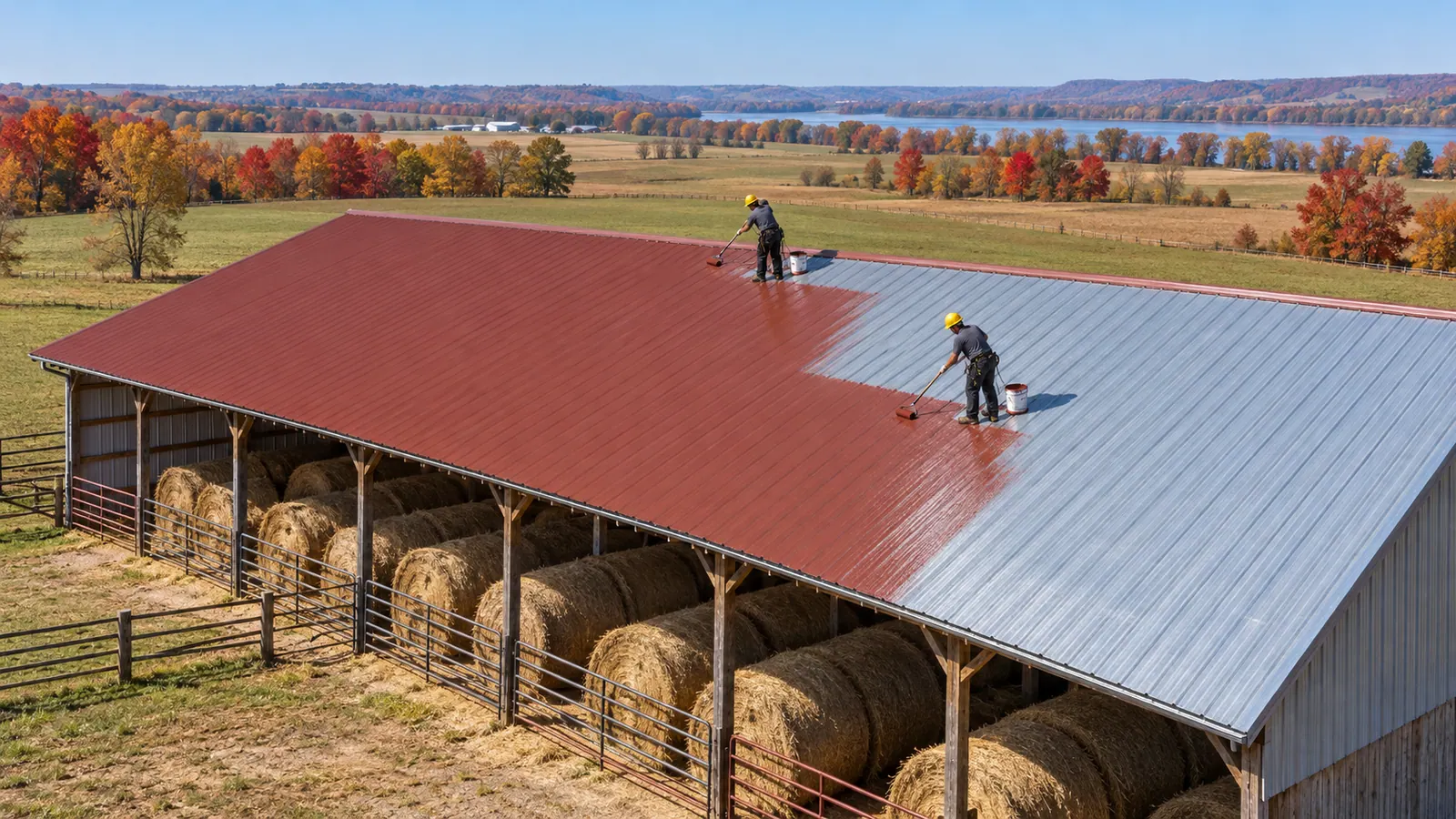
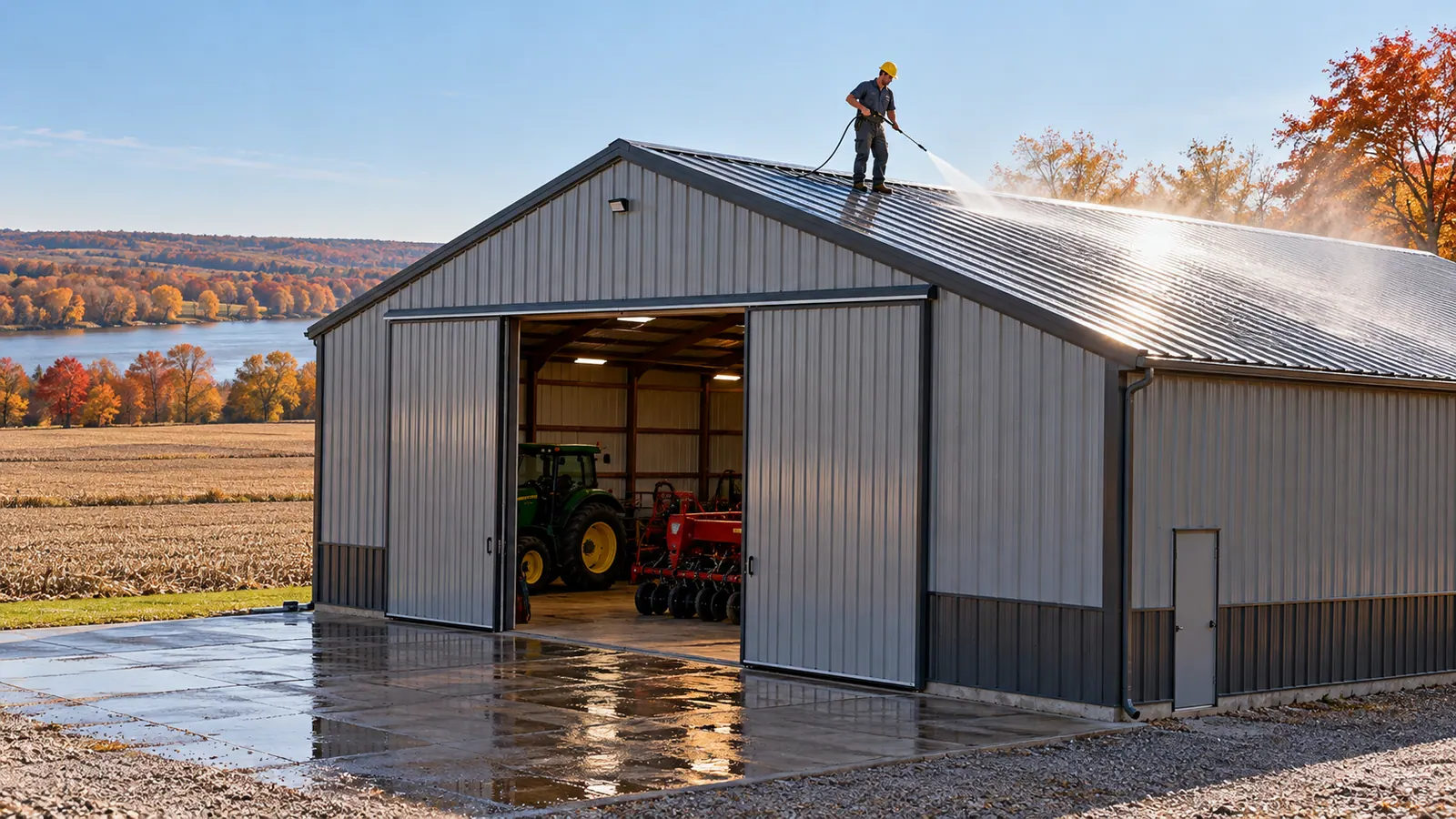
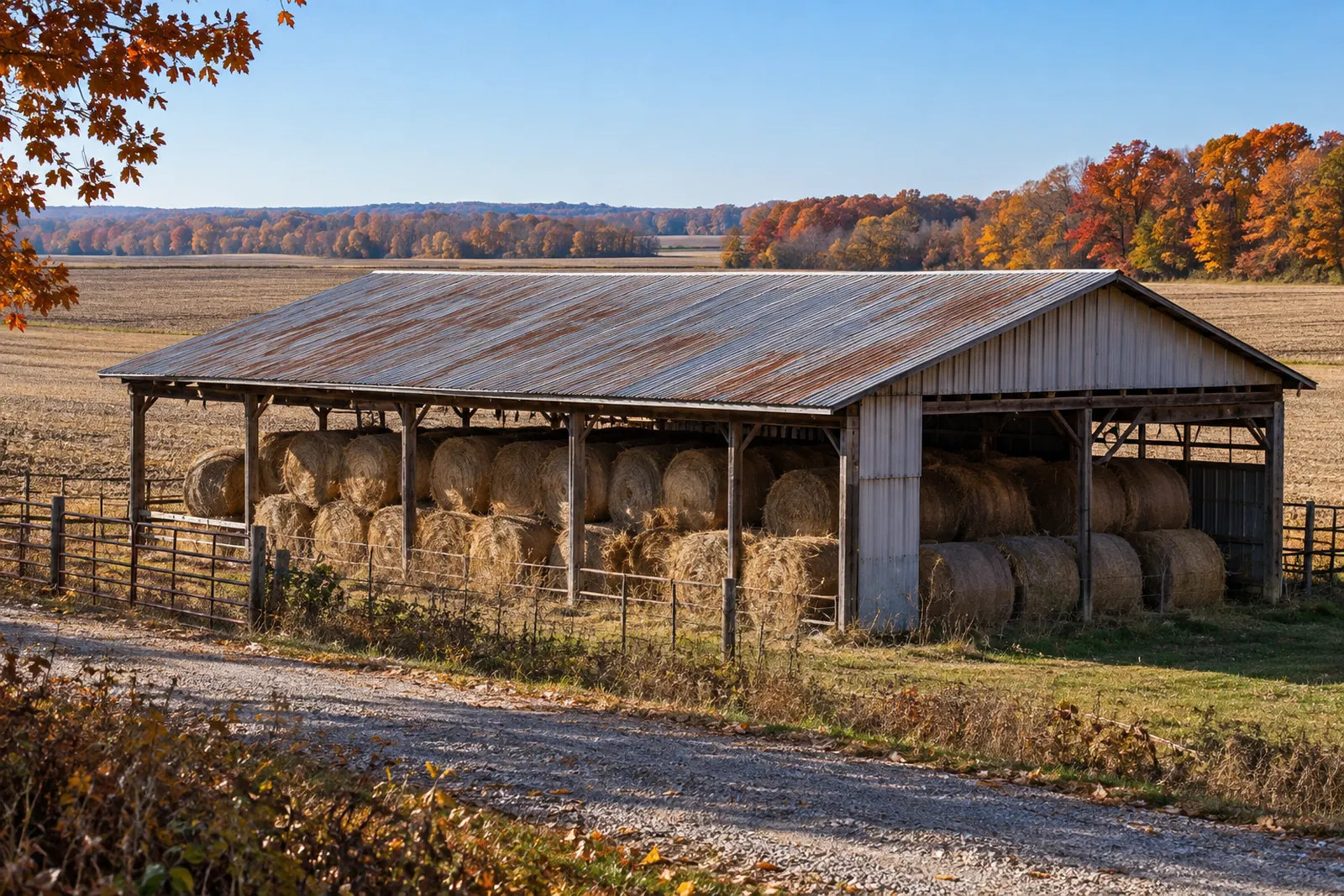
Agricultural metal buildings used for business count as commercial work, and the farmland around Morganfield is full of them. Machine sheds, equipment barns, and storage buildings carry long runs of exposed-fastener panels.
What sits inside those buildings changes how the roof wears. Fertilizer and chemical storage speeds corrosion on panel undersides and screw tips, and livestock barns hold moisture that rusts purlins from below.
Farm and shop roofs here wear from the inside as much as the outside. These four conditions come up most.
CorrosionMoist air from livestock or stored fertilizer reaches the screw tips and purlins first. Rust there loosens screws even when the roof looks fine from above.
 Laps
Machine sheds carry panel runs dozens of feet long, and every end lap along them flexes with heat. Each one gets cleaned, sealed, and reinforced with fabric.
 Eaves
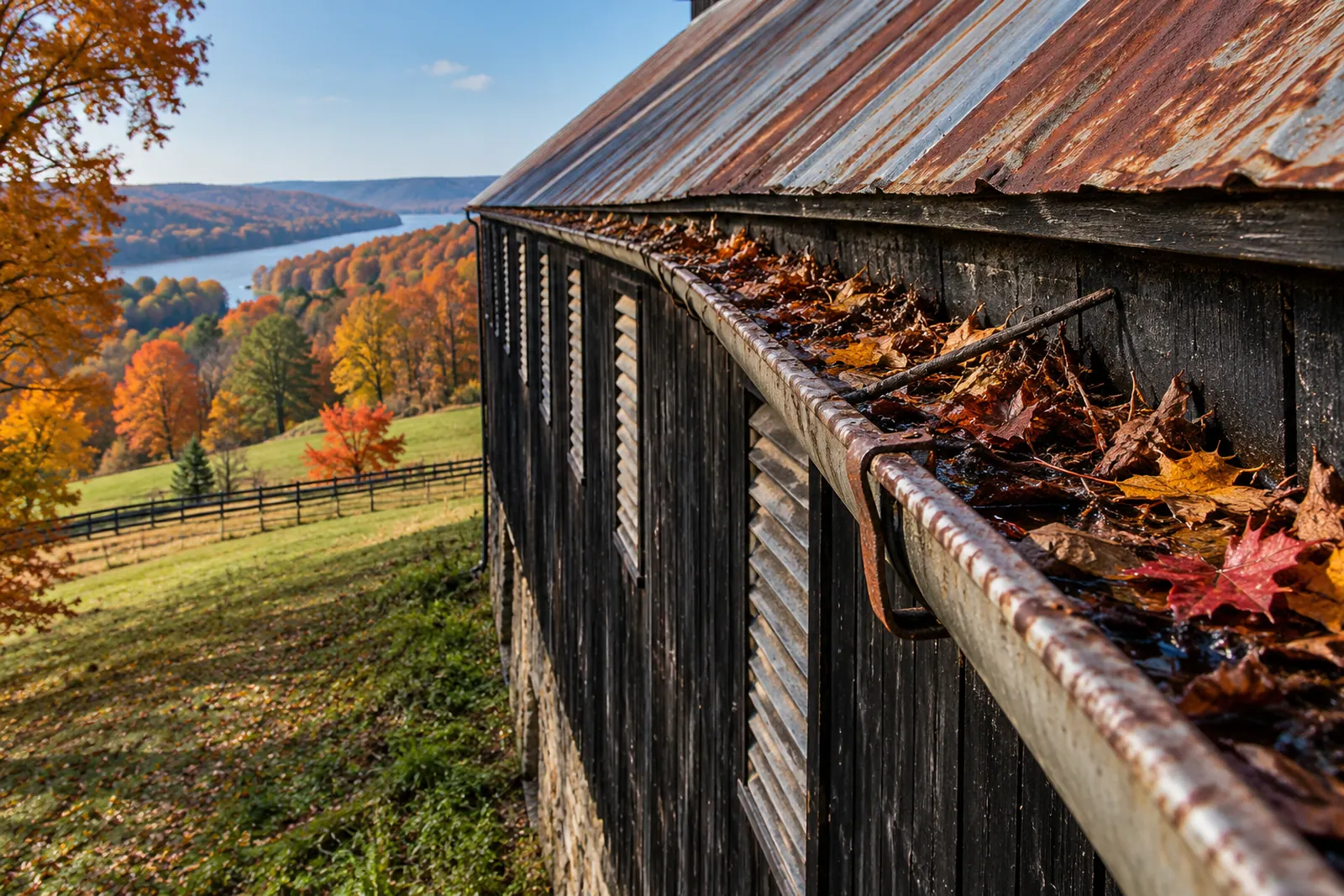
Birds nest under ridge caps and in open eaves, packing debris against the metal. Nests come out and closures get resealed before coating.
 Wind
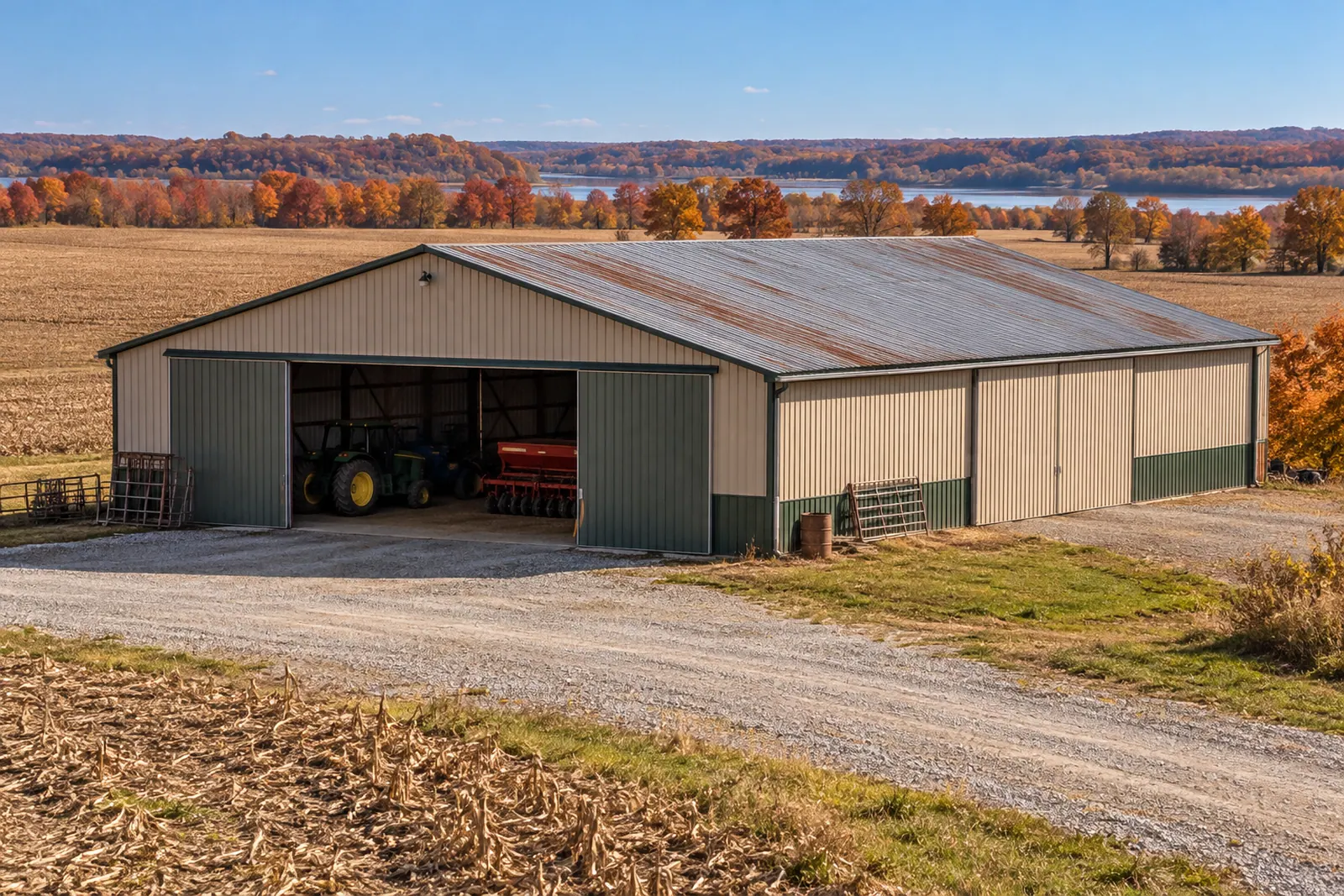
Wind gets under the eaves of open-sided sheds and pulls at rake trim and ridge caps. Loose trim is refastened with new screws first.
On a farm or shop roof with solid steel, coating protects the building and what is stored inside it.
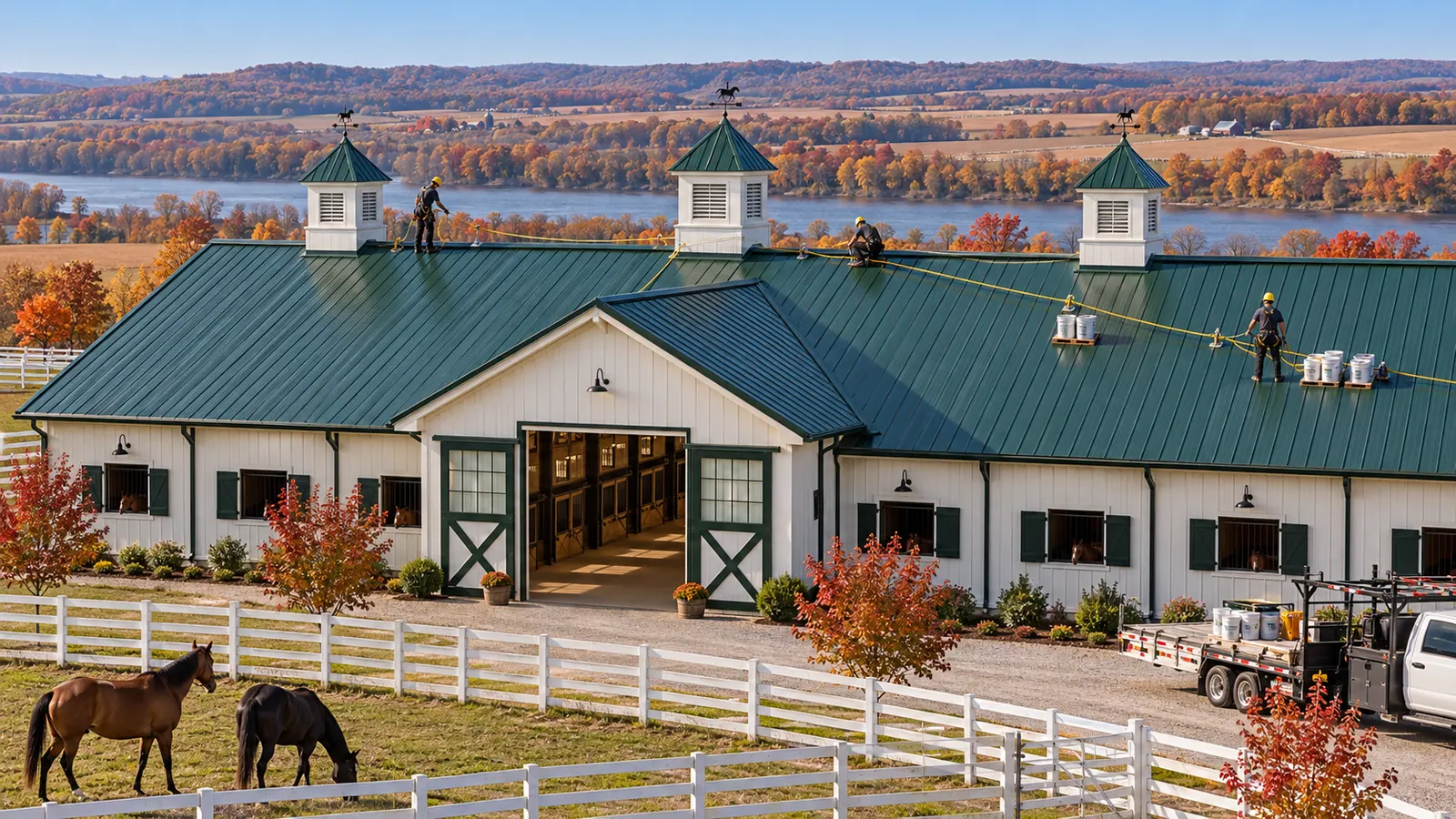
Sealing every screw, lap, and ridge cap keeps rain off the machinery, feed, and supplies under a Morganfield shed. The steel stays in place, so the building keeps working through the job.
Coating firm panels costs less than stripping a long shed and installing new metal, since labor goes into prep instead of tear-off.
Corroded screws come out and larger-diameter screws go in, so the roof is held down by new hardware under the coat.
A white topcoat reflects more summer sun off the panels, which helps shops and storage buildings that have little insulation.
These three systems cover most farm and shop roofs around Morganfield.
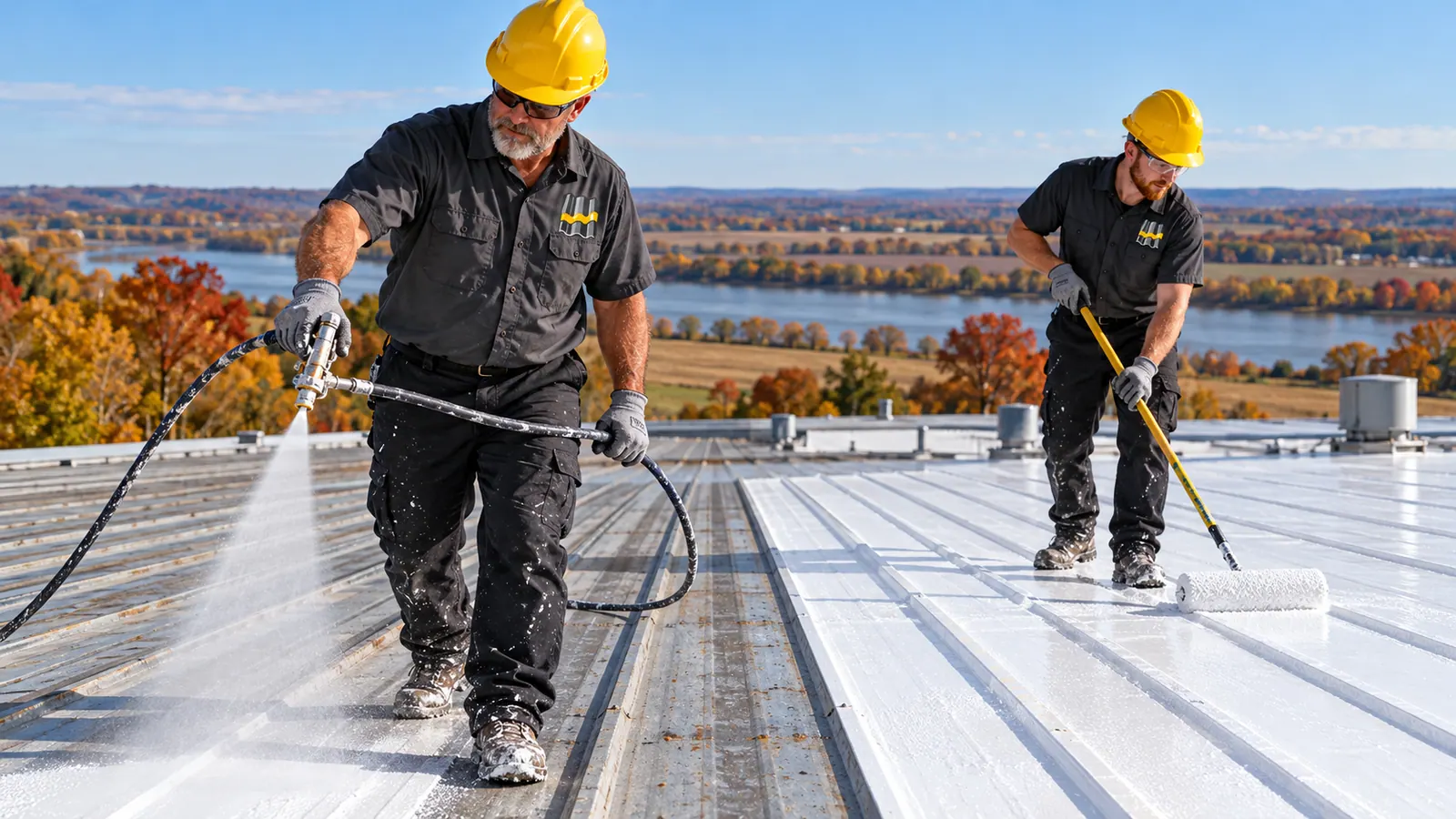
Exposed-fastener sheds and shops get new screws, sealed laps, and a full coat over clean, primed panels.
Metal roof coating details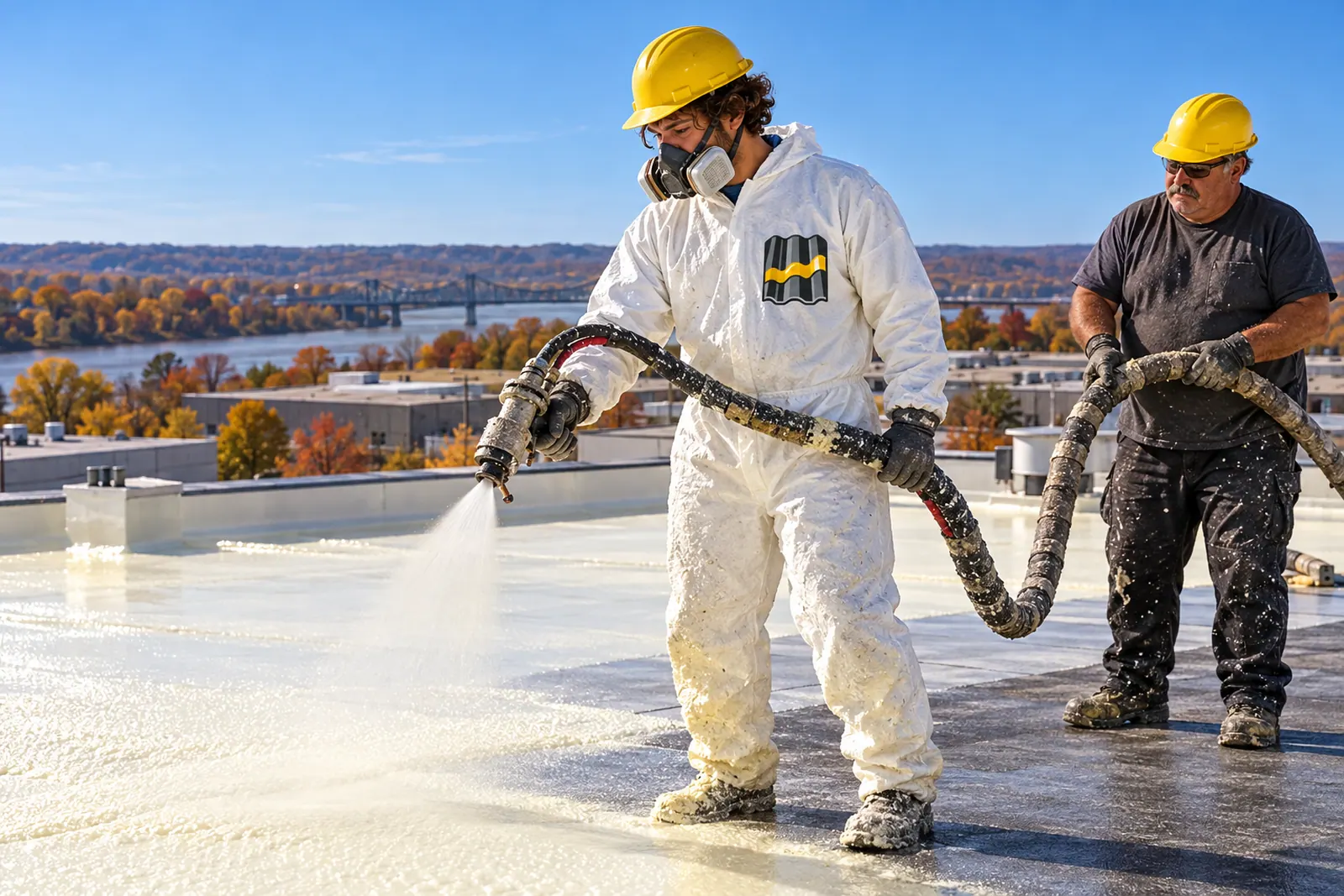
Uninsulated shops where people work year-round gain insulation when foam fills the panel ribs under a topcoat.
Spray foam roofing details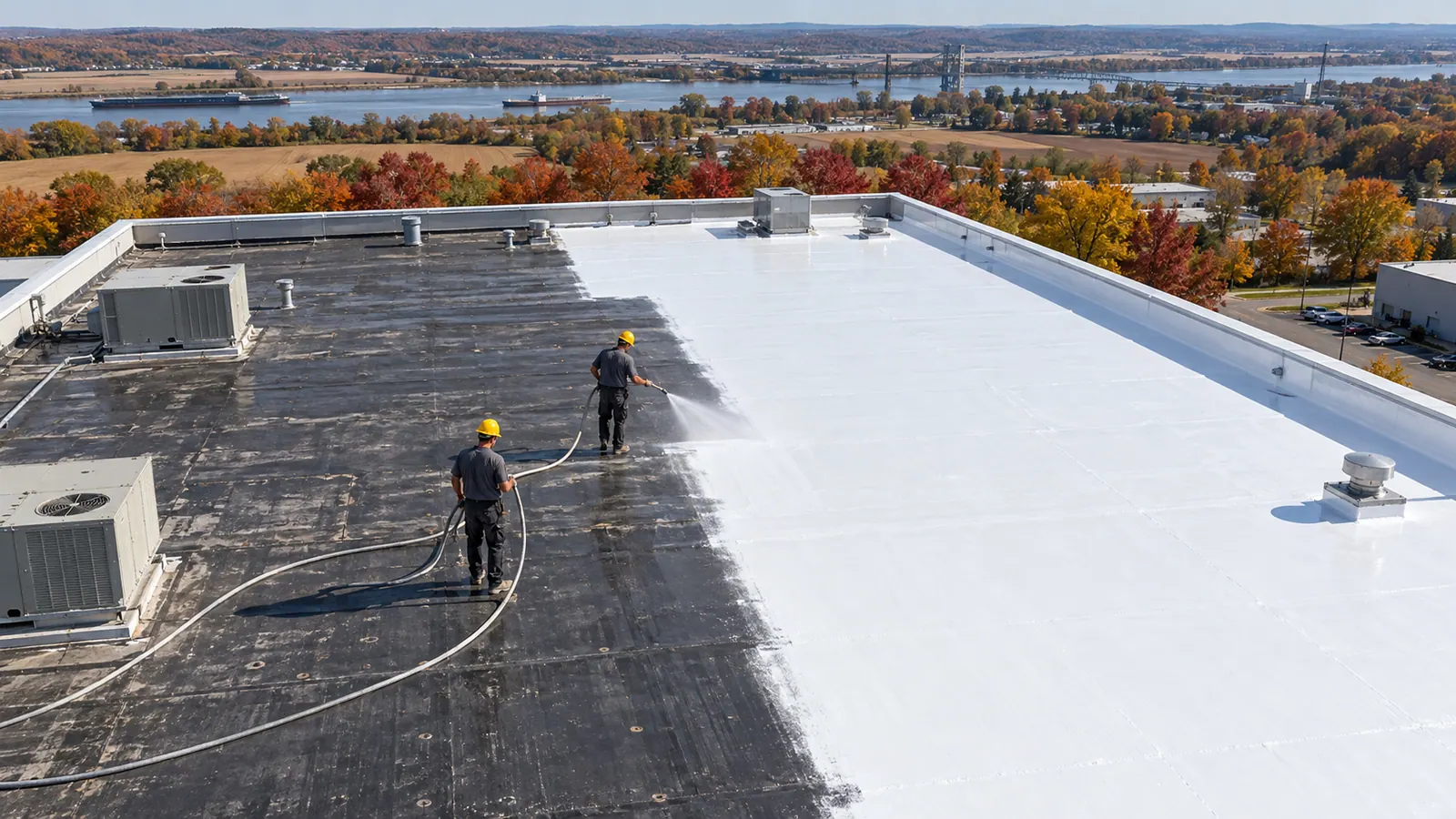
Low lean-to roofs along the side of a barn hold water at the eave and take silicone.
Silicone roof coating detailsRust inside a farm building often starts at the screw tips. Call us and tell us what is stored under the roof.
Call UsFarm roofs get extra attention inside the building before any work starts on top.
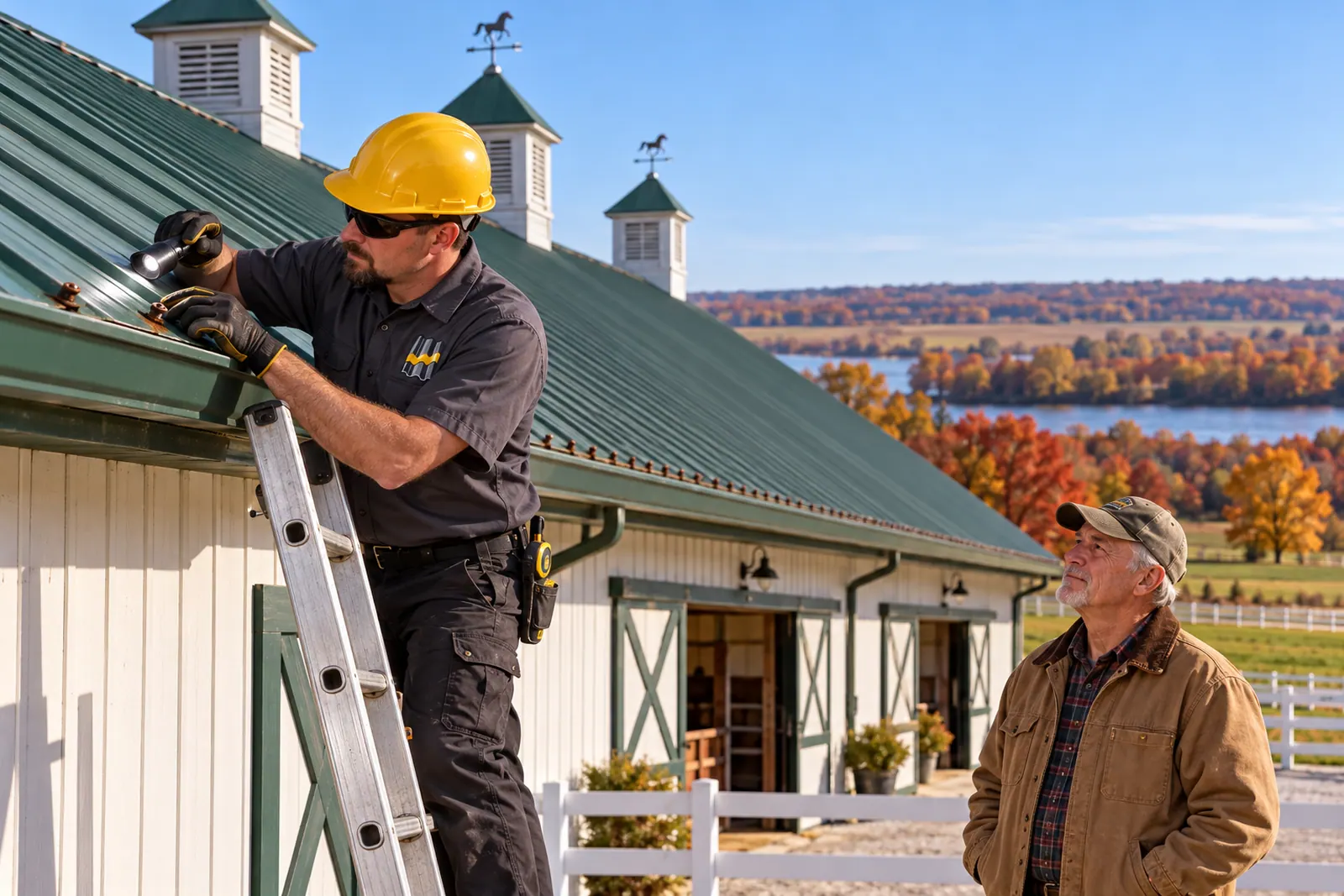
We look at the roof from inside first, checking purlins, screw tips, and panel undersides, then walk the top for laps, ridge caps, and trim. Soft purlins or holed panels are repaired before any coating plan.
Grain dust, bird droppings, and nest debris come off with a thorough pressure wash. Panels have to be clean for primer to stick.
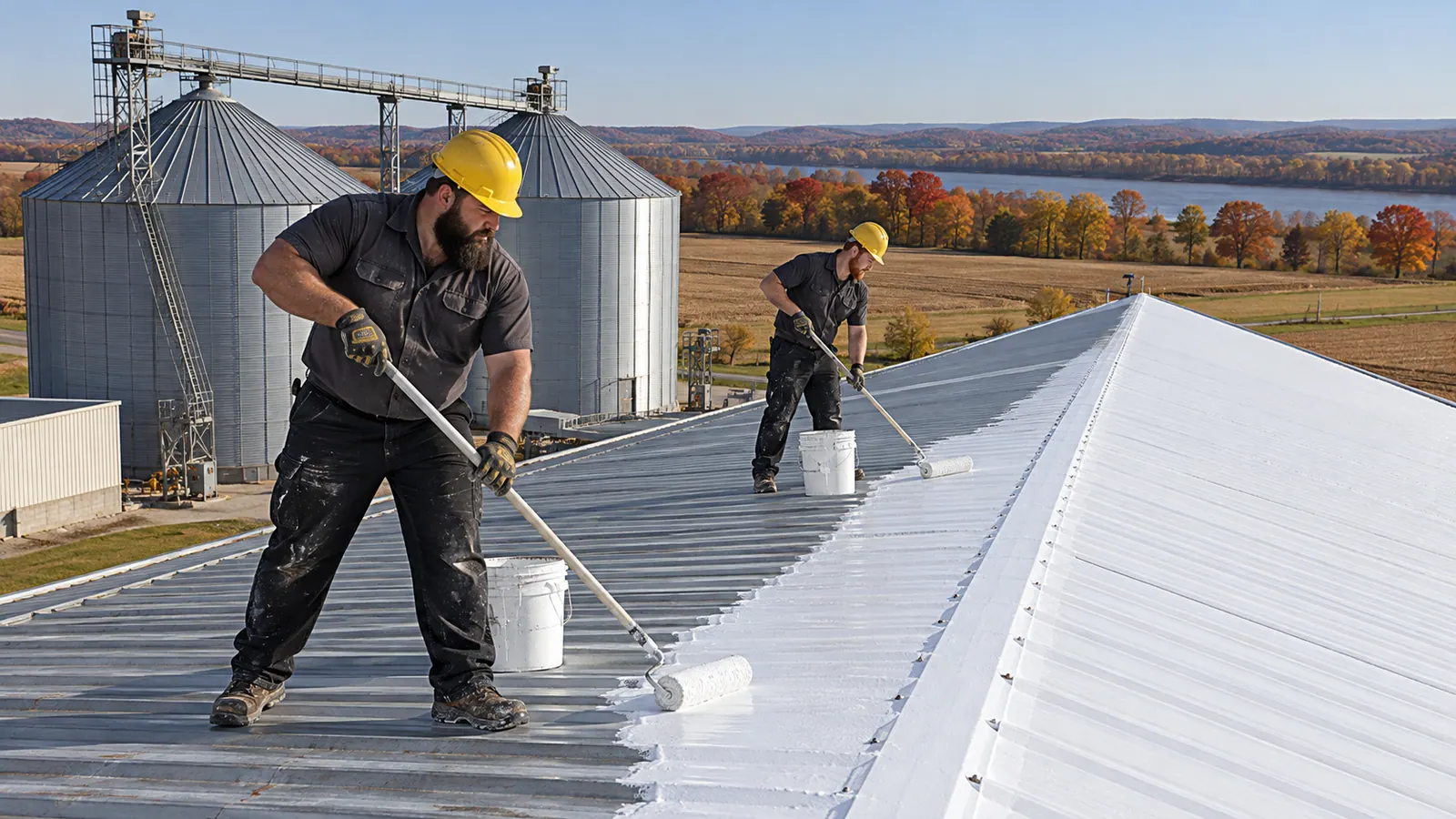
Corroded screws come out rather than getting capped, and larger-diameter screws with new washers go in. Ridge caps and rake trim are refastened at the same time.
Red rust gets a rust-inhibitive primer, end laps get fabric, and base and top coats go on dry panels. Thickness is measured before the job is done.
Outside Morganfield, we coat commercial metal and low-slope roofs in Henderson and the towns below.
Farm or shop outside this list? Call us or send us a message.
Hopkins County seat, with coating days judged on local dew.
Metal roof coating in Madisonville
Answers on inspections and farm buildings for Morganfield and the Union County farmland around it.
The state building inspector covers Union County, including Morganfield, because the state Union County contact sheet lists no local inspector. Morganfield is the county seat, so the County Judge Executive’s office handles local electrical inspection questions. Call the City of Morganfield about local requirements first.
Ask before work starts. Coating-only work with no structural change is the simplest scope to clear, while re-panel sections or structural repairs on a farm building go to the state building inspector listed for Union County.
Yes, when their panels and purlins are solid. Agricultural metal buildings used for business count as commercial work. Fertilizer storage speeds corrosion, livestock barns hold moisture that rusts purlins, and open sheds catch wind under the eaves, so we wash thoroughly and replace corroded screws instead of capping them.
Often yes, since the work happens on top of the roof. Washing and screw work make noise, so we plan the loudest days with you. Spraying near open sides or vents waits until animals are moved or the openings are covered.
Pick a dry, mild stretch when the shed is least busy, often between harvest and planting. Equipment parked under open sides should move before spraying, and a few dry days in a row give primer and coatings time to cure.
It changes the prep. Chemical storage corrodes panel undersides and screw tips faster, so we check from inside, replace more screws, and treat rusted purlins. The coating protects the top side, while ventilation inside stays the owner’s call.
Send the roof size and condition for a ballpark range, or call us to walk the shed with you.
Leave a name and number and we will call about your roof.
Or call now: (270) 236-5481