 Fasteners
Cracked Rubber Washers
Sun dries out the rubber under each screw head until it splits. Water then tracks down the shank and drips along the purlin line inside.
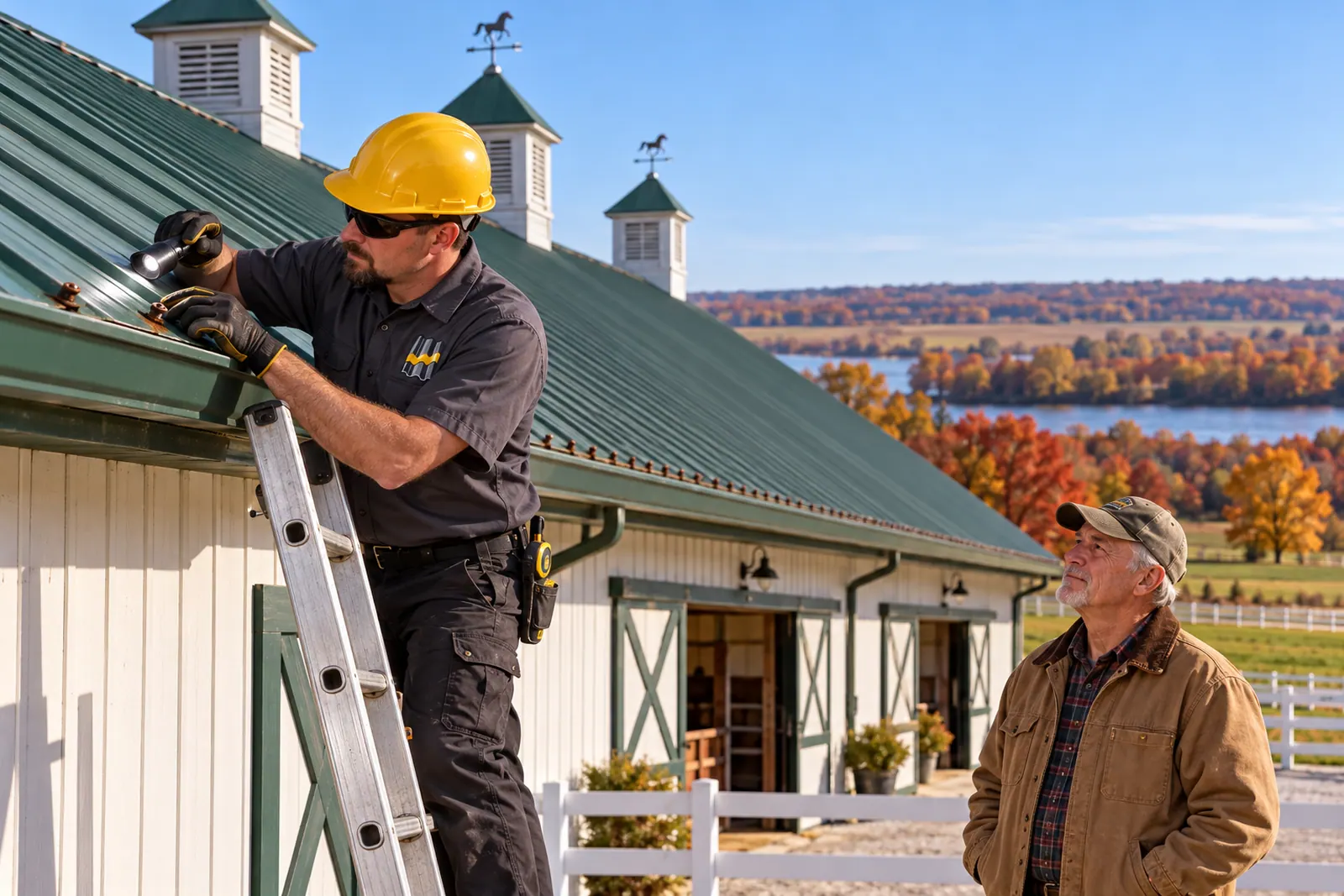
We do commercial metal roof coating in Henderson after fixing what leaks first: cracked washers, open end laps, loose ridge caps, and rust at the screw rows.
One roof walk usually sorts a metal roof into one of these columns. Anything in the right column gets repaired before we coat.
Most leaks on exposed-fastener roofs start at a handful of details. These are the four we look at hardest on every roof walk.
FastenersSun dries out the rubber under each screw head until it splits. Water then tracks down the shank and drips along the purlin line inside.
 Laps
Panel movement on hot afternoons and cold nights pulls side laps apart. We clean each lap and run a butyl or elastomeric seam sealer before any coating.
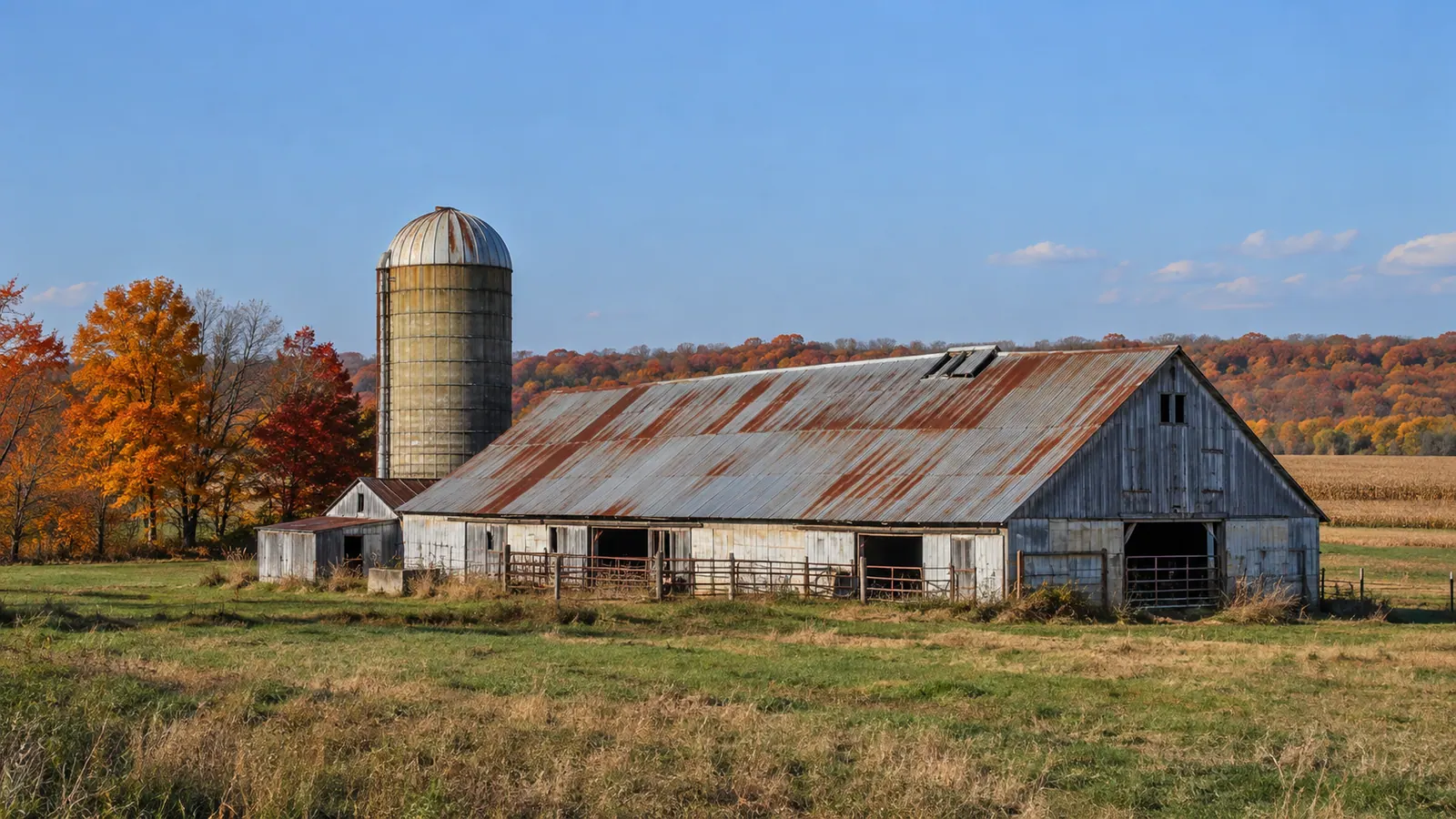 Galvanized
Powdery white deposits along the ribs mean moisture has been sitting on zinc-coated steel. It blocks adhesion, so cleaning and abrasion come before primer.
 Edges
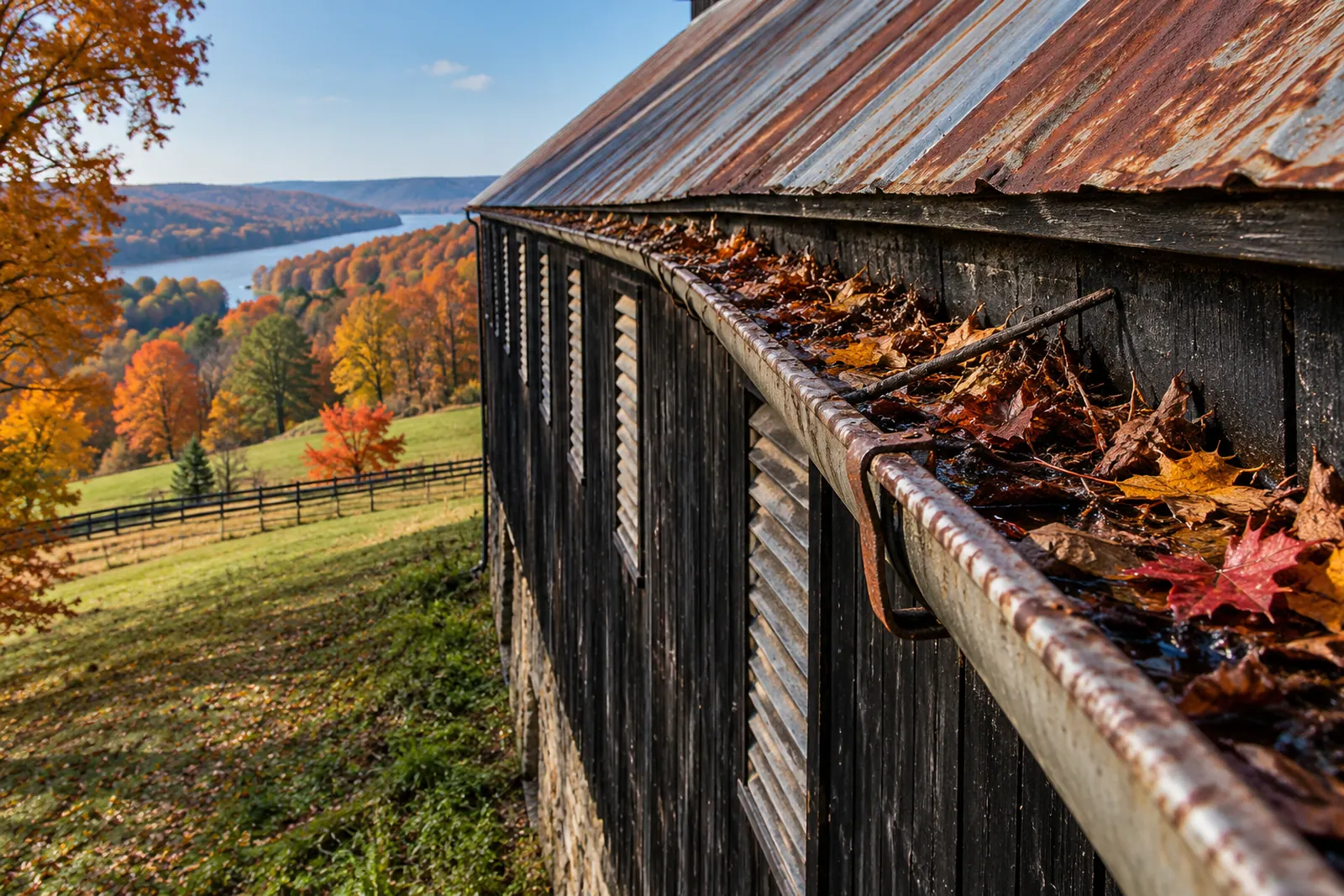
Backed-out screws along ridge caps and eave trim rank among the most frequent leak points here. Rusted gutter bottoms get repaired at the same visit.
Metal roofs here take one of four approaches. The panel profile, the pitch, and the insulation below decide which one fits.
| Approach | Fits Best On | Prep Before Coating | Later Upkeep |
|---|---|---|---|
| Silicone Over Metal | Low-pitch panels and eaves that hold water | Wash, prime rust and galvanized spots, detail laps | Recoat with more silicone |
| Acrylic Over Metal | Pitched panels that drain fast | Wash, spot-prime, fabric at end laps, dry weather to cure | Recoats easily with acrylic |
| Spray Foam Plus Topcoat | Under-insulated buildings with irregular panels | Raise trim and gutters, protect parked vehicles | Topcoat renewal over the foam |
| Detail Work Only | Standing seam with tight seams | Seal penetrations, clips, and panel ends | Recheck details after storms |
On a metal roof with firm purlins, coating protects what is already there. These four gains are the ones owners ask about most.
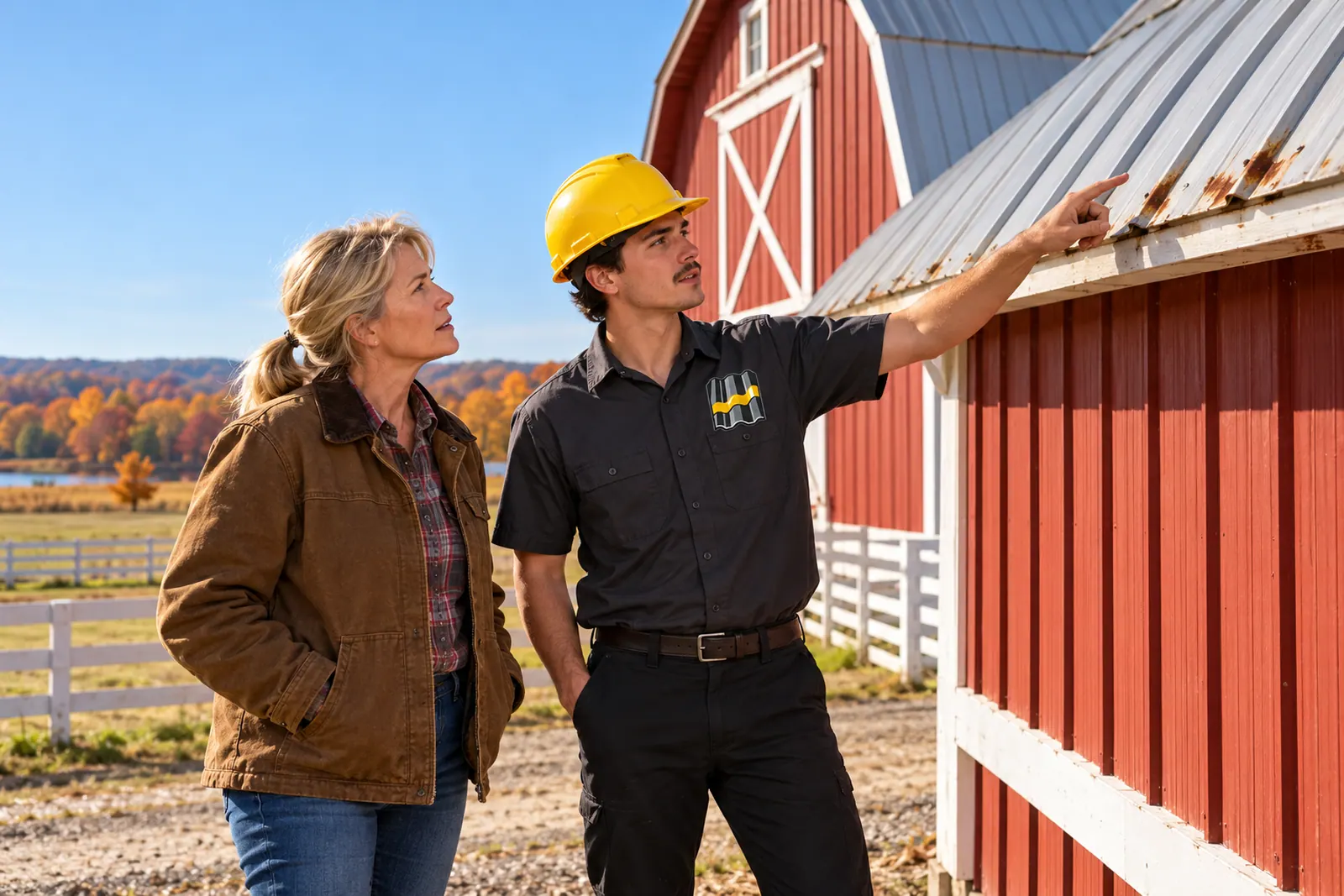
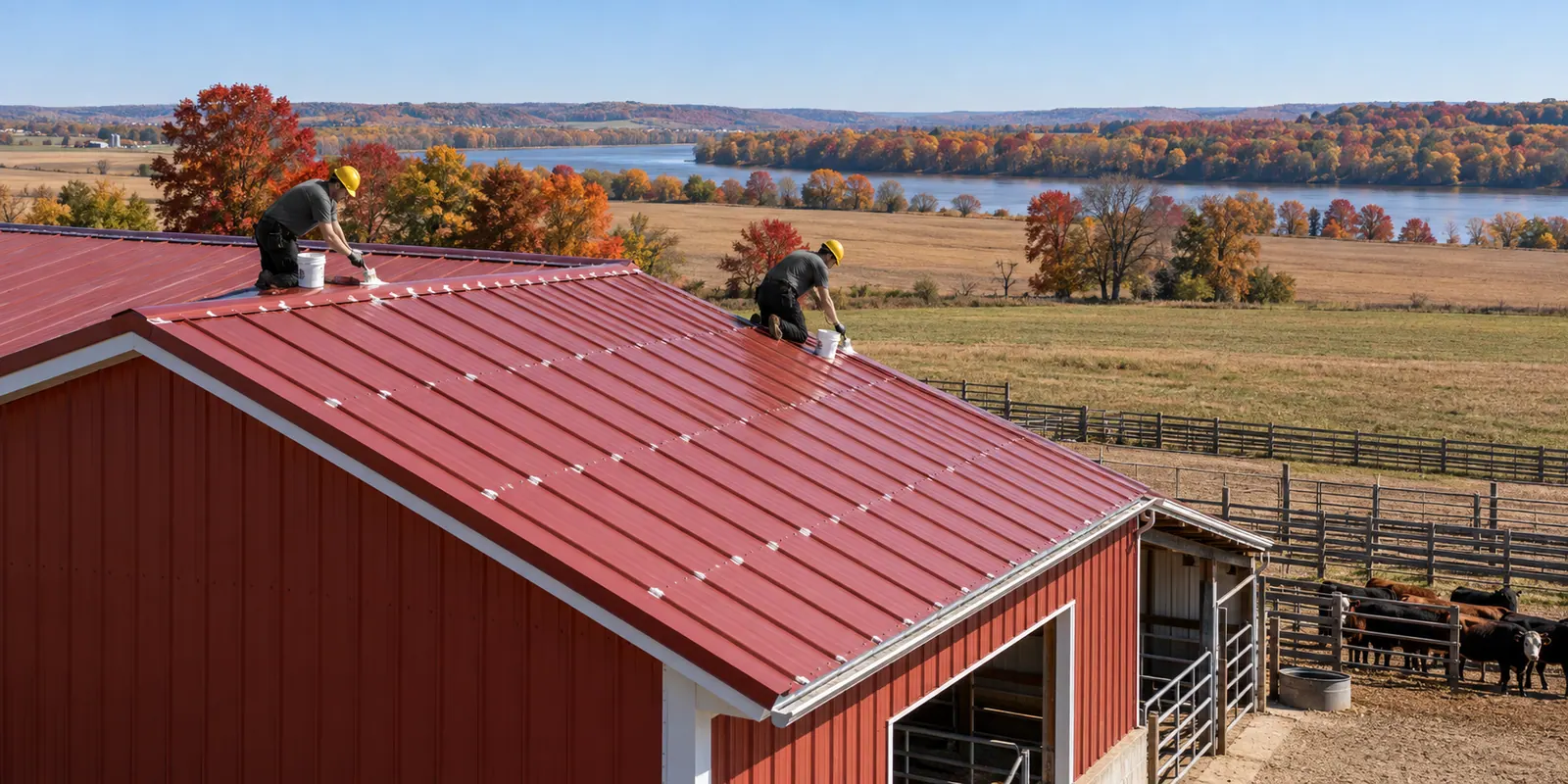
Coating a metal roof means every screw head, side lap, end lap, and ridge cap gets sealed in one mobilization. Leaks that used to be chased one at a time get handled across the whole roof.
Keeping solid steel in place usually costs less than tear-off and new panels, because labor goes into prep and coating instead of demolition.
Old panels stay on the building, so nothing goes to the landfill and the interior stays covered while crews work on top.
A white topcoat sends back more of the sun’s energy than faded metal. The Cool Roof Rating Council directory lists tested reflectance values for comparing products.
Rust at the fasteners spreads every wet season. Send us the roof size and condition for a ballpark range before more steel is lost.
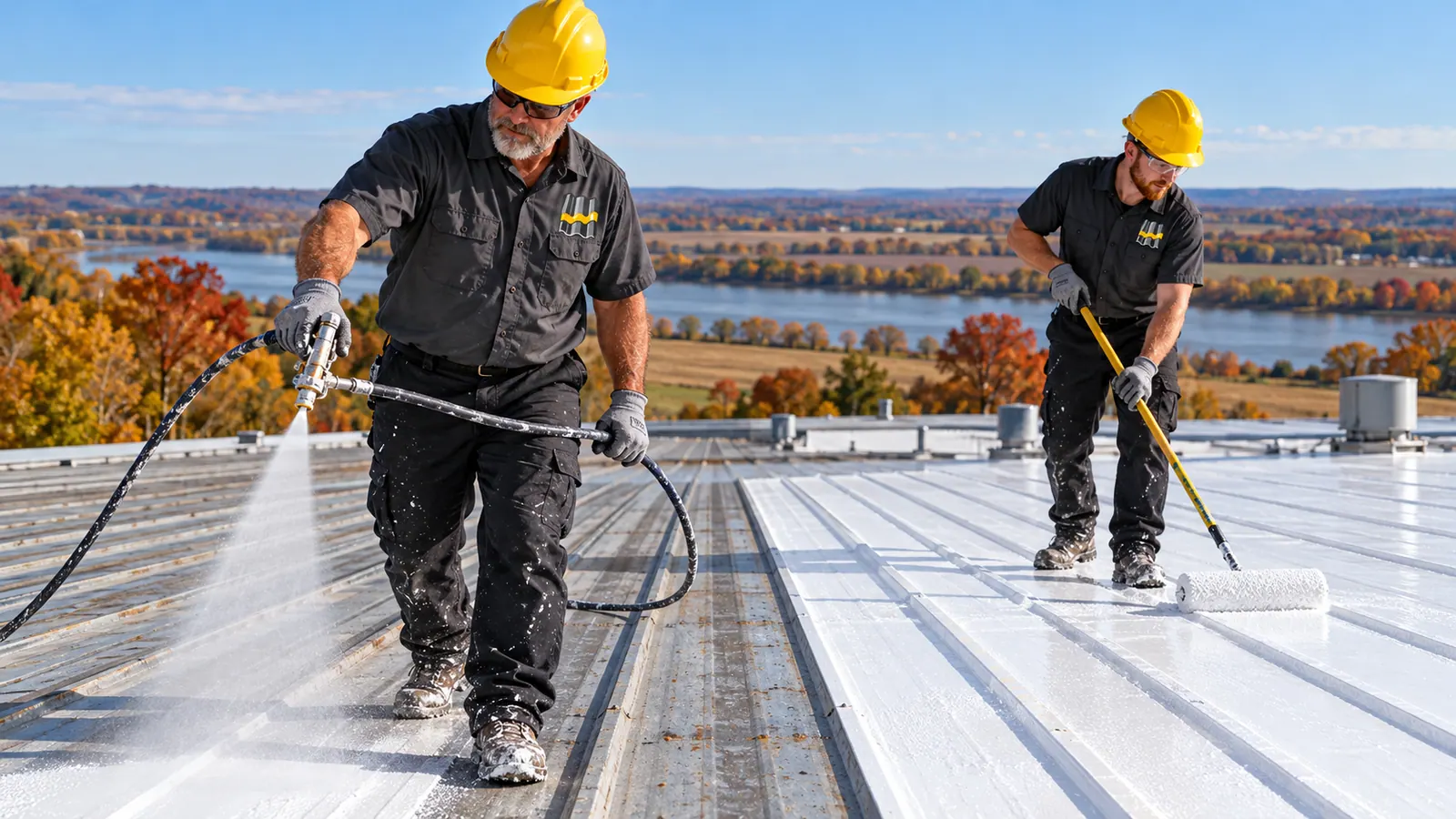
Get Free Ballpark EstimateMetal roofs get the most detail work of any system we coat. Here is the order it happens in on Henderson buildings.
We check every screw row, side lap, end lap, ridge cap, gutter, and skylight panel, and look at panel undersides from inside where we can. Firm steel gets coated; soft steel is marked for cut-out.
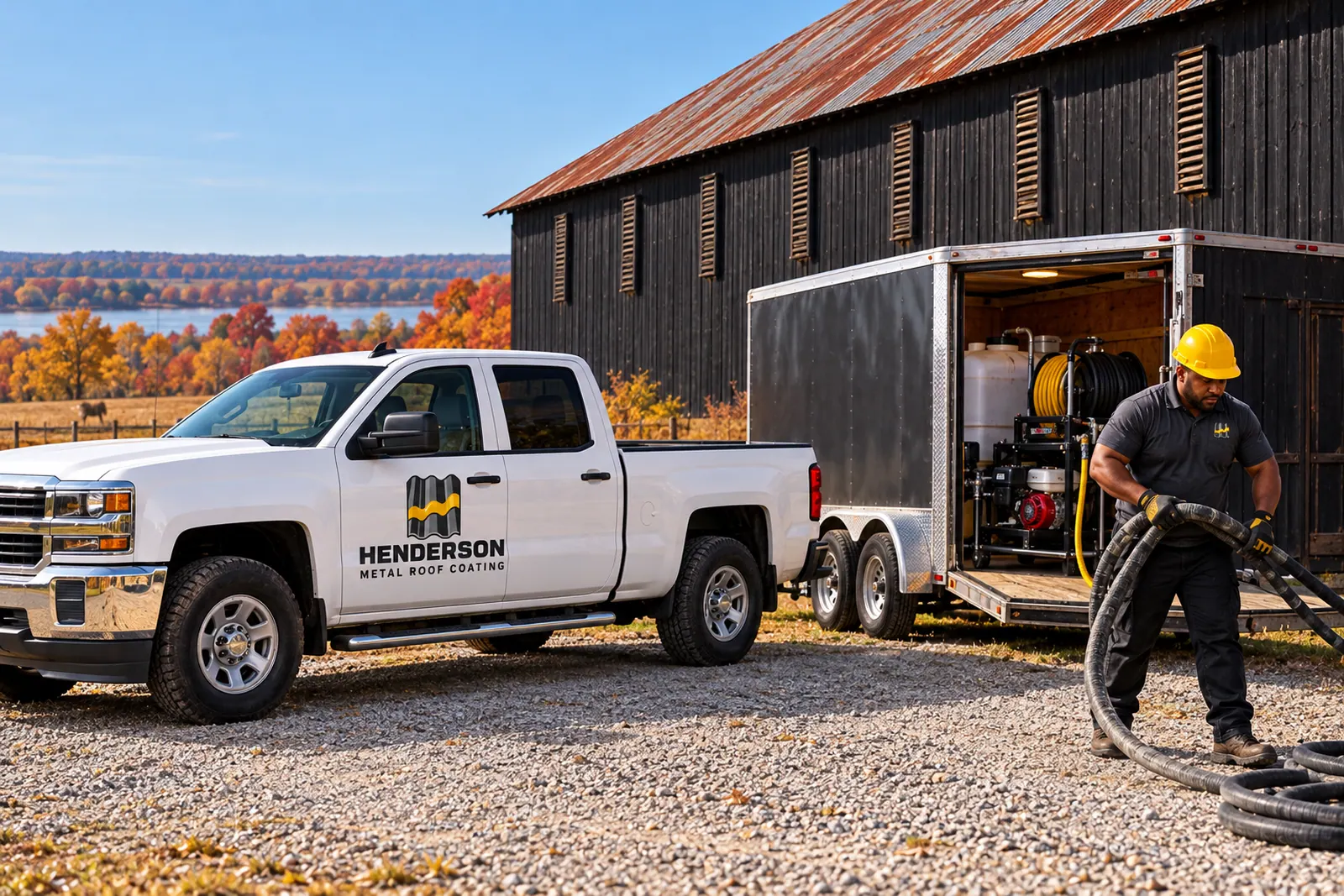
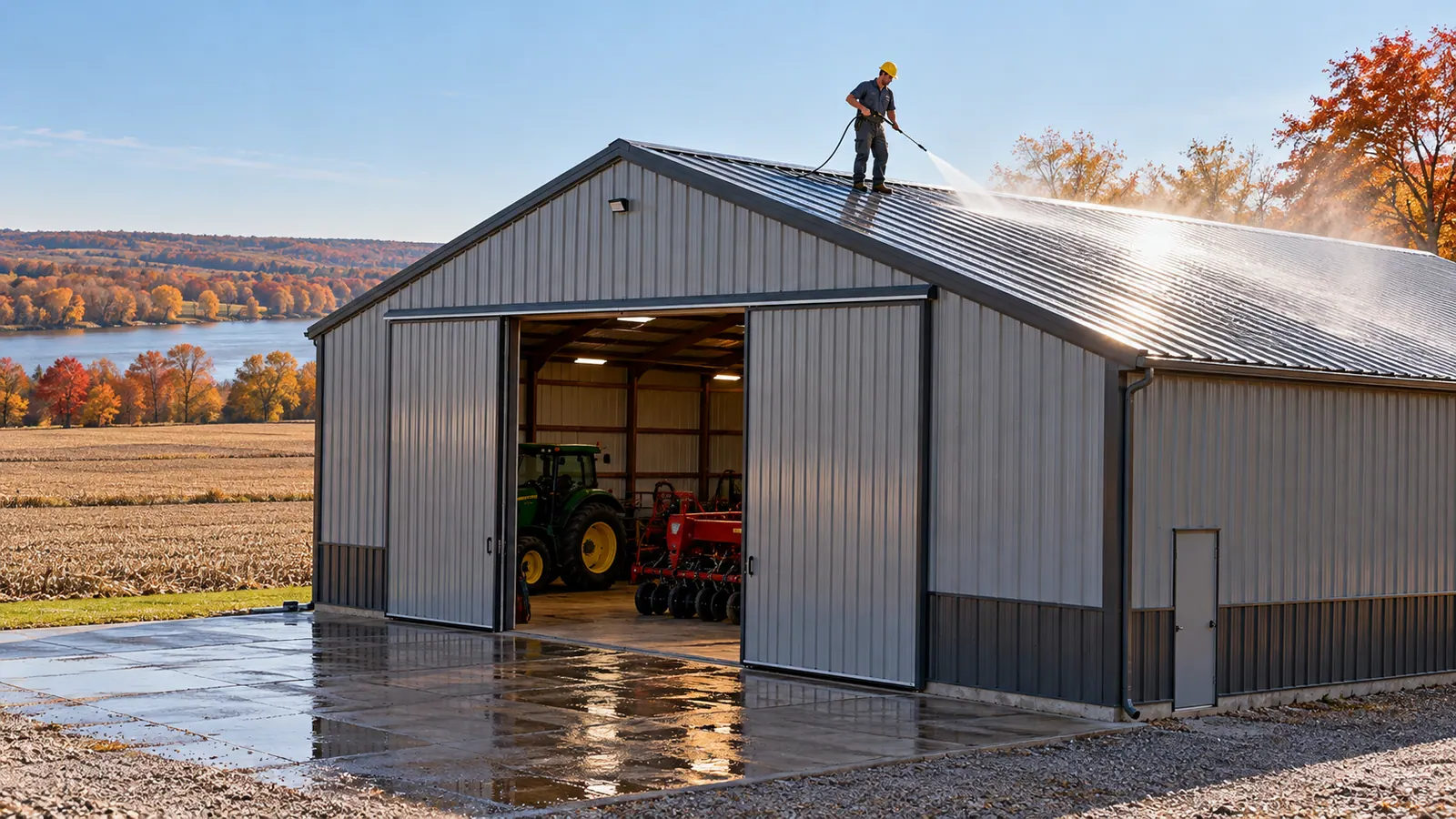
A pressure wash clears dirt and chalking. Grinders and wire brushes take rust back to bright metal, and patch panels go in where rust has eaten through a gutter, valley, or panel.
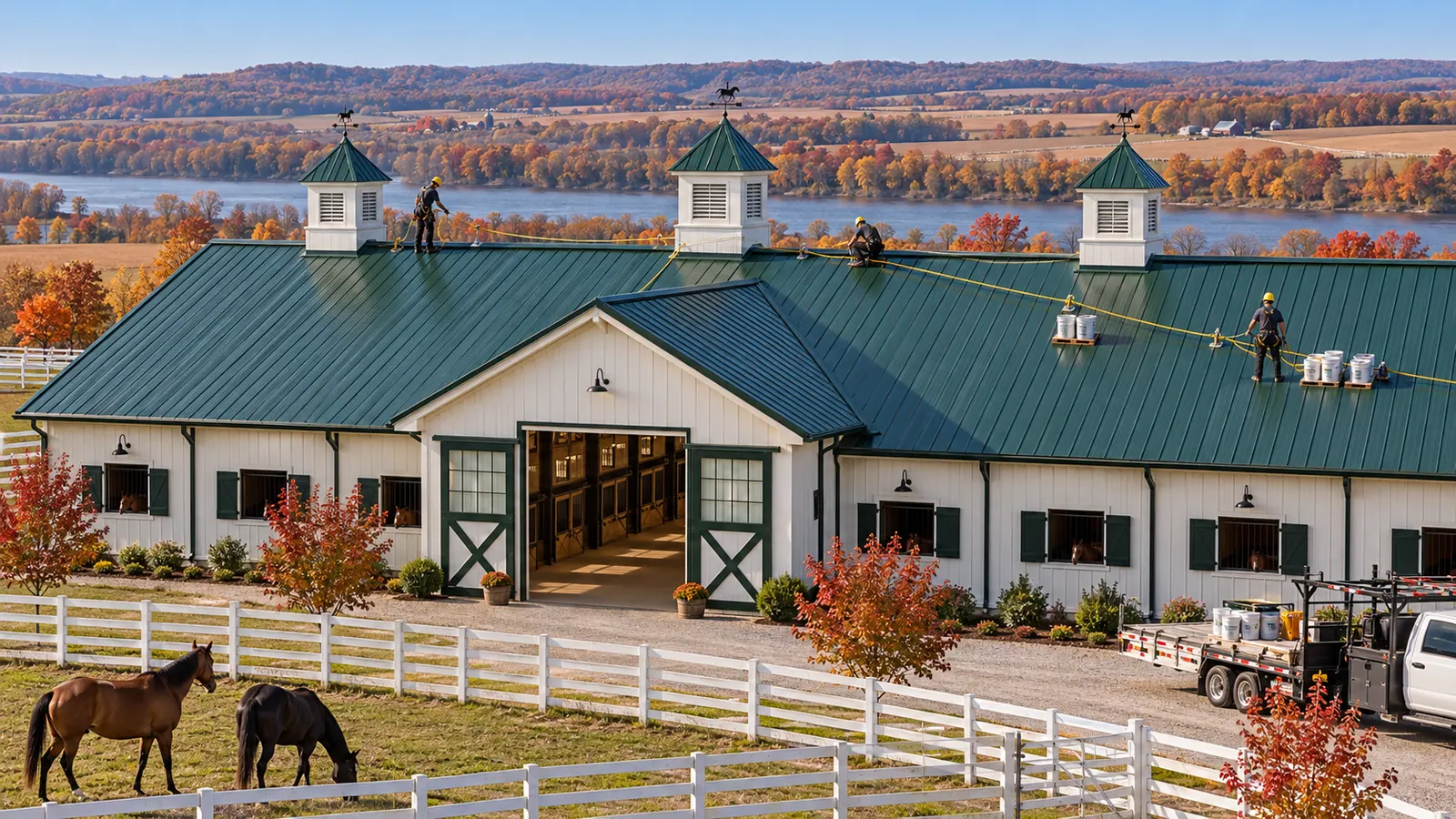
Stripped screws are swapped for larger-diameter screws, then each head gets sealant or a filled cap. End laps, ridge caps, rake trim, and wall transitions get polyester fabric embedded in coating.
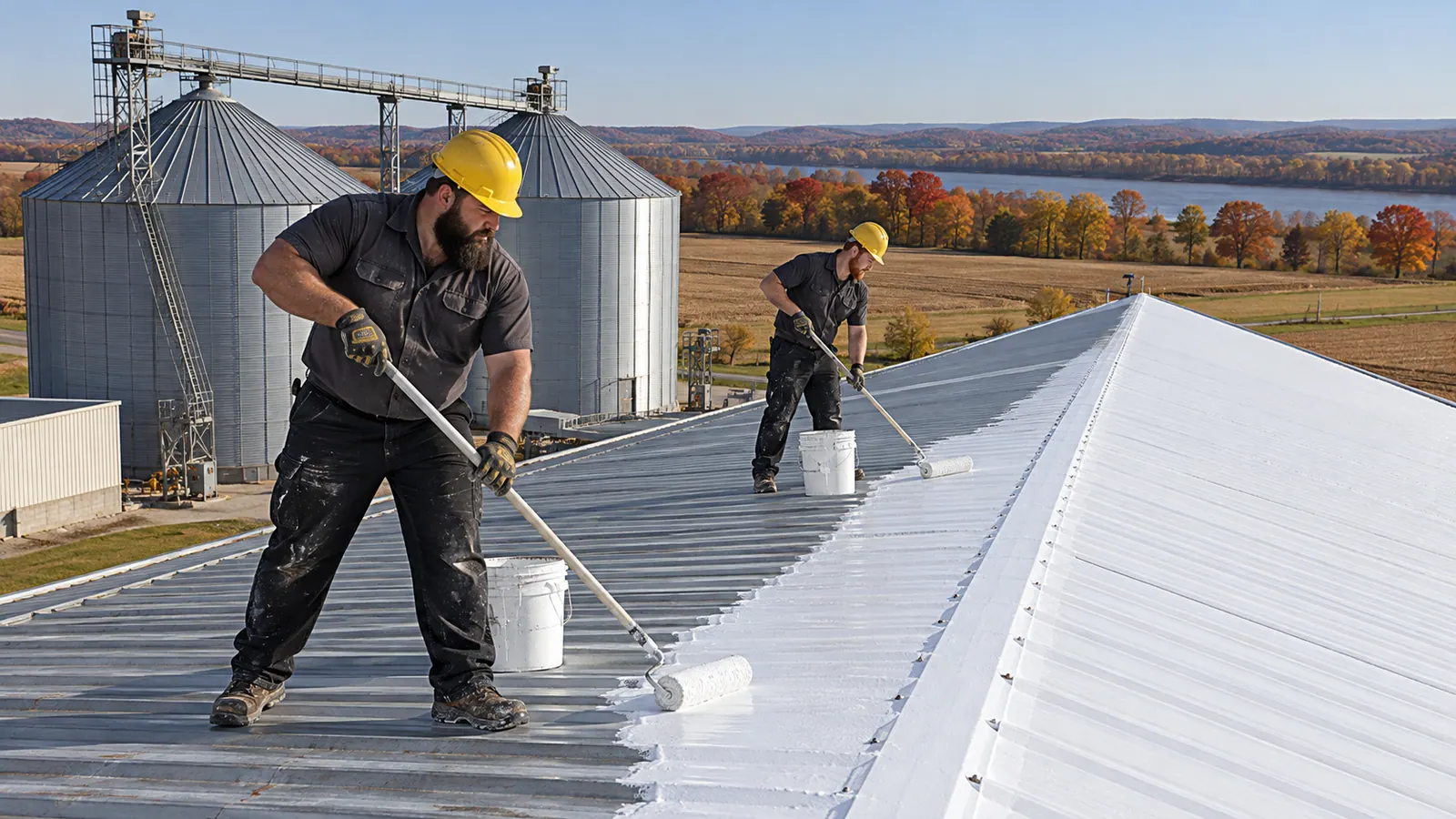
Rust-inhibitive primer goes on red rust and bare galvanized areas first. Base and top coats follow on dry panels, and we measure film thickness before calling the roof done.
Some metal roofs need a different coating on part of the roof. These three come up most often.
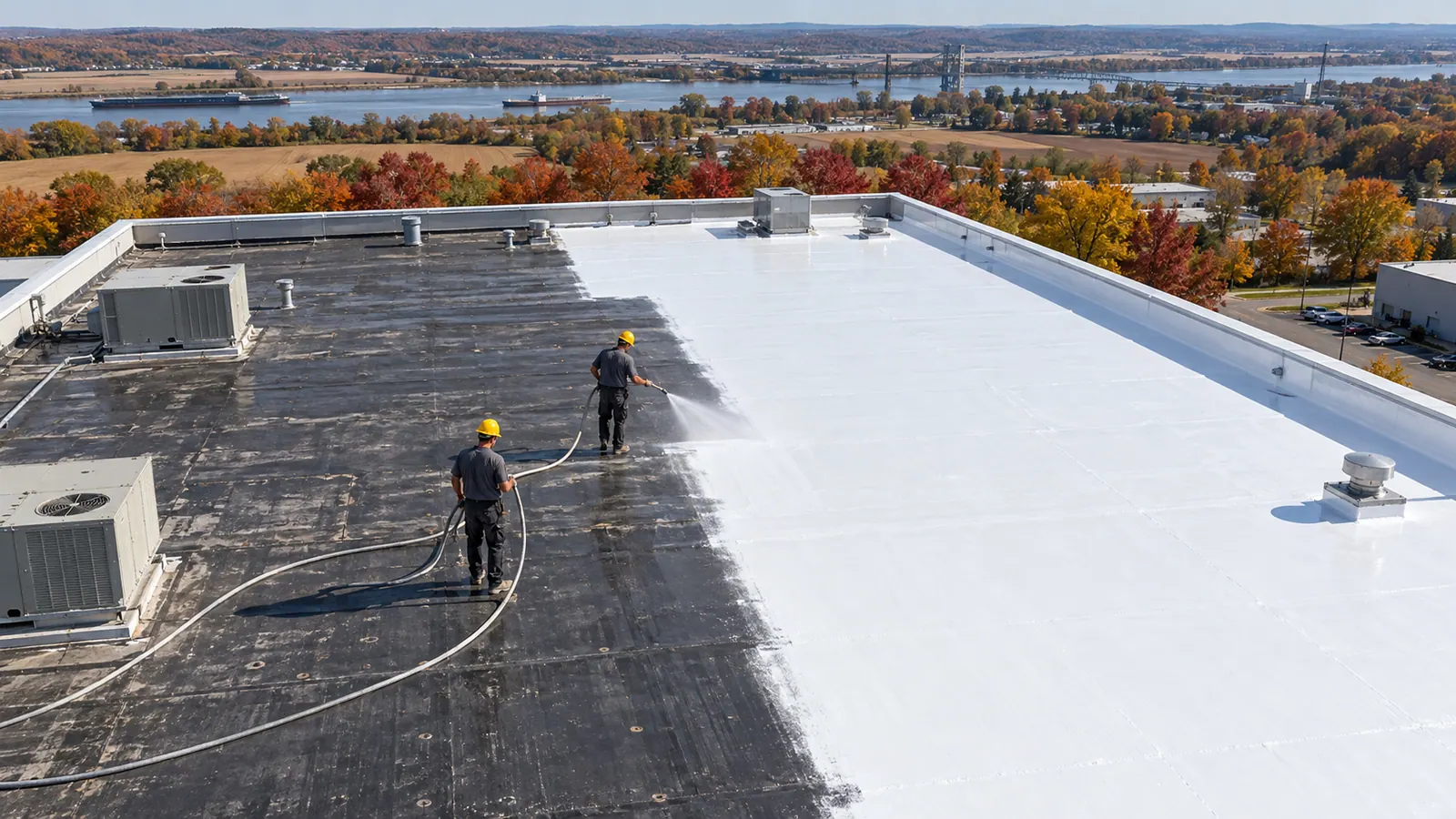
Low ends of long panel runs and flat eave sections that hold water after rain do better under silicone than under acrylic.
Silicone roof coating in Henderson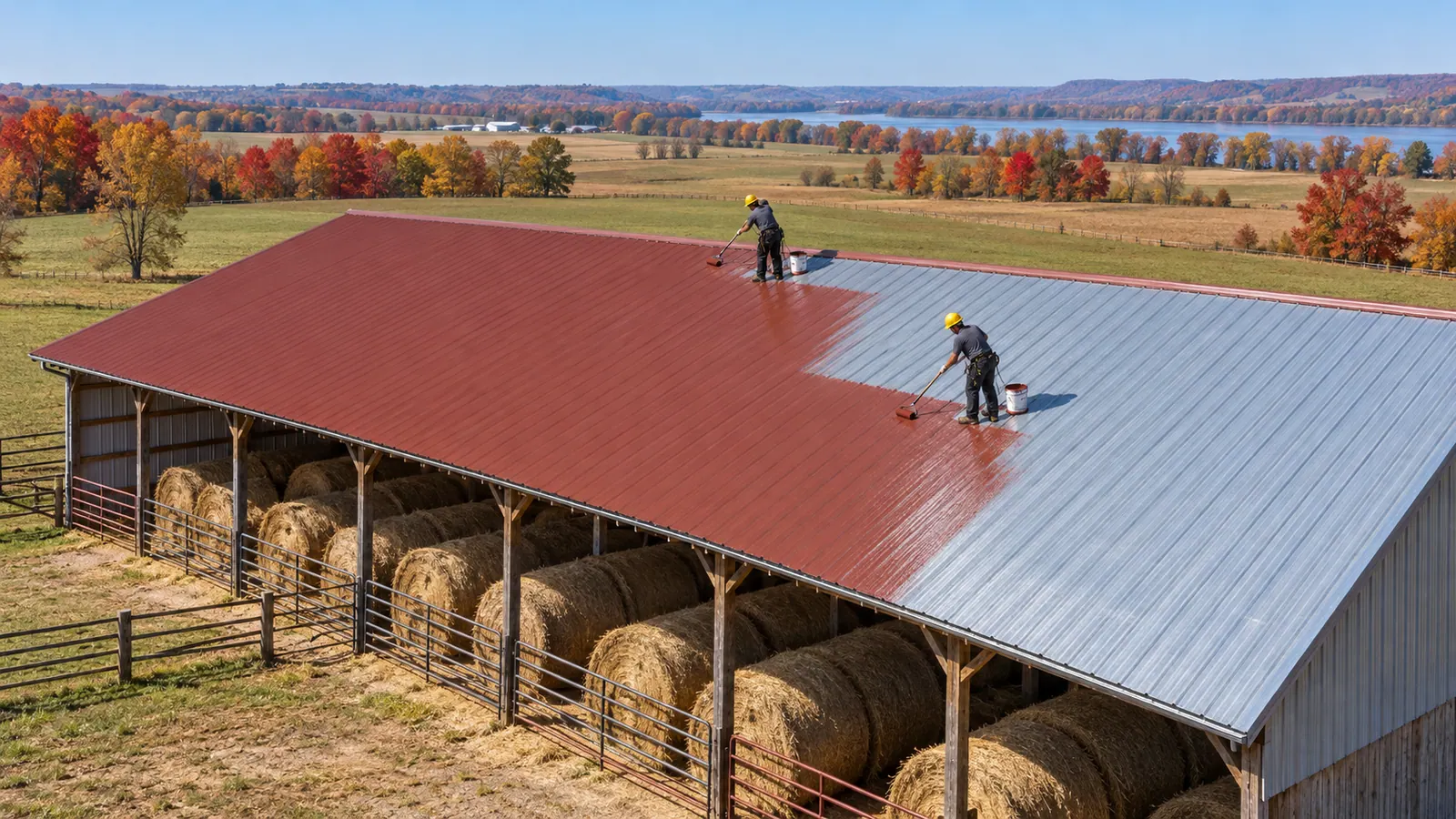
Pitched panels that drain quickly can take a bright white acrylic that recoats with more acrylic down the road.
Acrylic roof coating in Henderson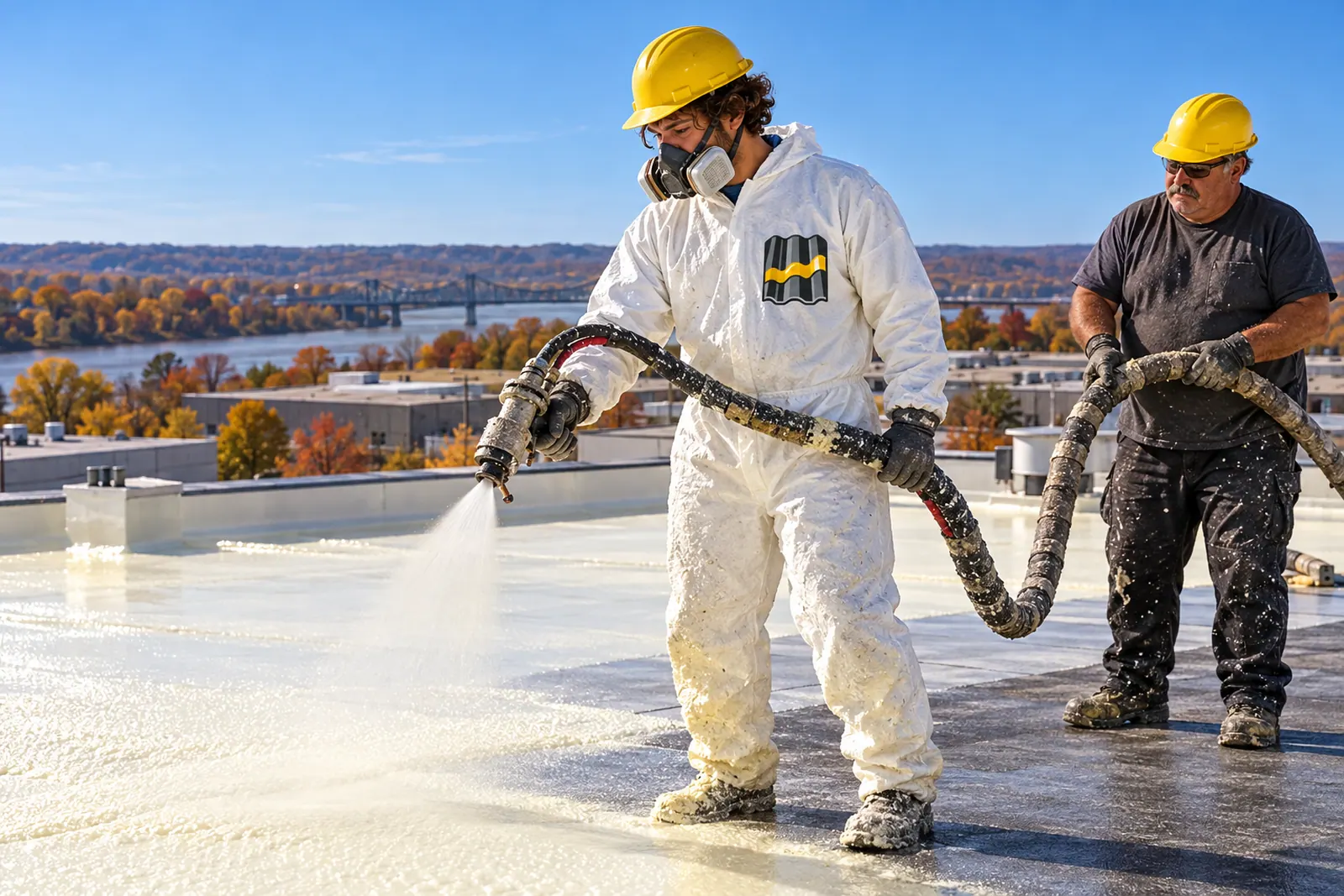
Buildings with little insulation under the panels gain R-value when foam fills the ribs before the topcoat goes on.
Spray foam roofing in HendersonSix answers about rust, screws, laps, and panel types on Henderson metal buildings.
Yes, once surface rust is cleaned back and primed. Loose scale comes off with wire brushes or grinders, the panels get rinsed, and red rust gets a rust-inhibitive primer. Holes rusted through a panel, gutter bottom, or valley need patch panels or new metal before coating.
White rust is powdery corrosion on zinc-coated steel where moisture sits, and it weakens adhesion. It shows as chalky deposits along ribs, dull patches at the eave, and film inside gutters. Cleaning and abrasion remove it, then a test patch confirms the coating holds.
Every exposed screw gets checked. Loose or stripped ones are replaced with larger-diameter screws, because older rubber washers crack in the sun and let water run down the shank. After tightening, each head is sealed with brush-grade sealant, a filled cap, or a fabric patch at clusters.
Each lap is cleaned and sealed with a butyl or elastomeric seam sealer. End laps also get a strip of polyester fabric embedded in coating, since water pushes against them in every rain. Ridge caps, rake trim, and wall transitions get the same fabric detail.
Prep differs because the two fail in different places. R-panel needs work on hundreds of screw heads and every lap. Standing seam hides its clips, so prep centers on seam ribs, penetrations, and panel ends, and some standing seam roofs need only that detail work.
Each gets its own repair before the field coat. Faded or cracked skylight panels are usually replaced, since coating would block their light. Ridge caps are refastened and their closures resealed, gutters are cleared and sealed, and skylights are masked off before spraying.
Share the roof size and condition for a ballpark range, or call us to walk the panels with you.
Leave a name and number and we will call about your roof.
Or call now: (270) 236-5481